

About
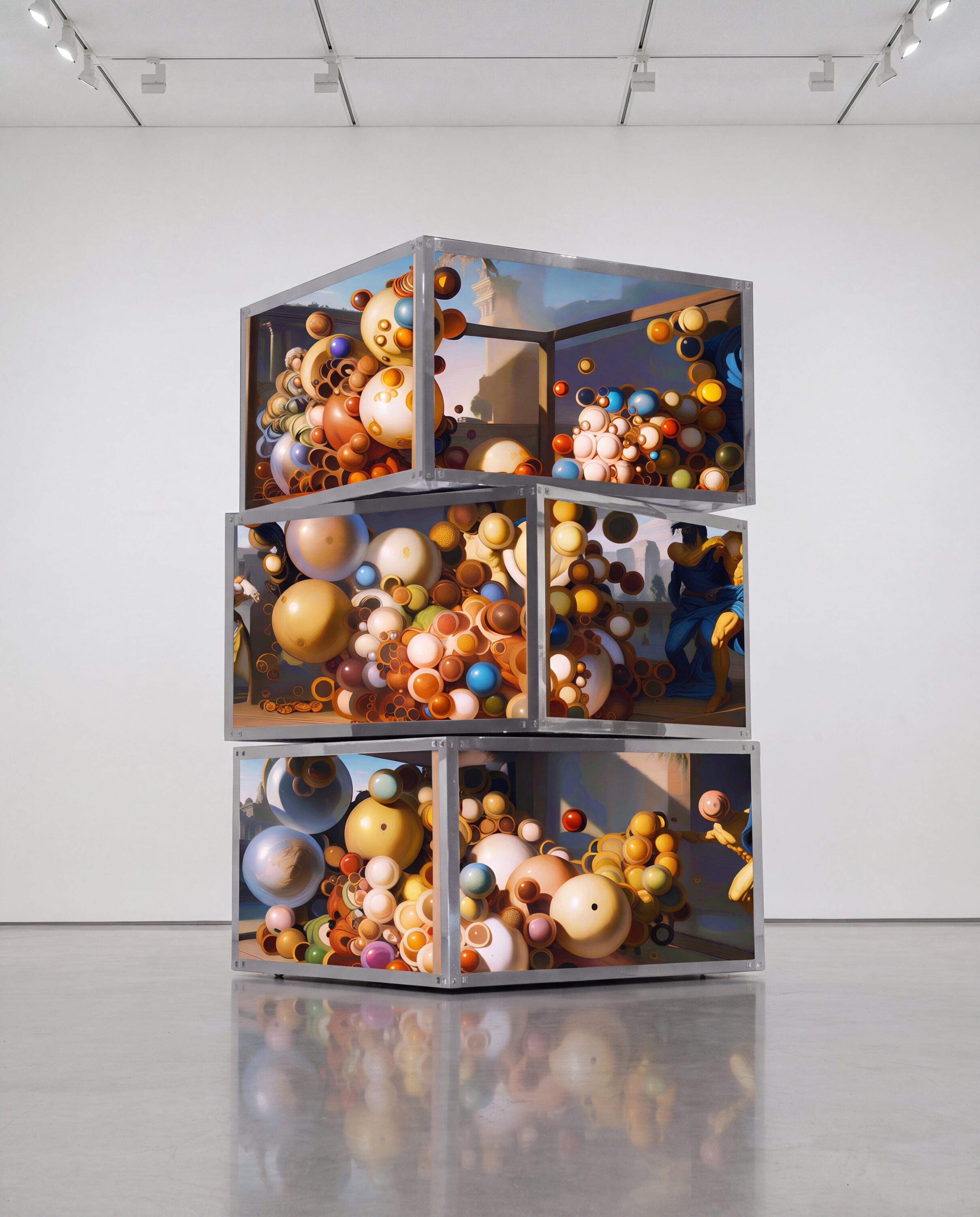
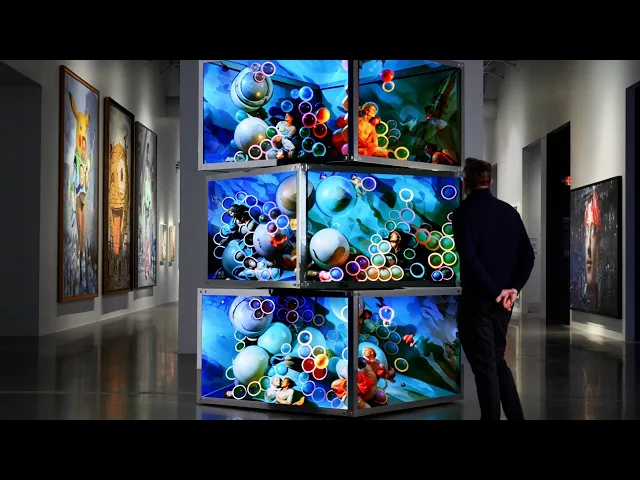
Experience Diffuse Control by internationally recognized, Wisconsin-native artist Beeple. This immersive, AI-powered installation invites visitors to participate in the creation of a constantly evolving digital artwork using images from MMoCA’s permanent collection. Across twelve monumental screens, visitor participation and artificial intelligence combine to generate ever-changing imagery, blurring the boundaries between artist, technology, and viewer.
Watch a preview of Diffuse Control before your visit to see how the installation comes to life.
Opening Reception
Saturday, September 19 • 7–10 PM
Celebrate the opening of Diffuse Control, Beeple’s first major presentation in Wisconsin, at a special evening reception at the Madison Museum of Contemporary Art. Enjoy food and drinks by Executive Chef Elena Terry from Tall Grass at MMoCA.
FAQ
Questions and Responses from MMoCA’s Director and Curator of Diffuse Control
Diffuse Control is a kinetic video sculpture by digital artist Beeple. Composed of twelve synchronized video screens embedded in a polished aluminum structure, the work produces a continuously evolving visual environment using generative artificial intelligence, custom software, curatorial selection, and real-time audience participation.
For MMoCA’s presentation, works from the Museum’s permanent collection become source material for the sculpture’s generative system. The artwork invites visitors to influence what happens on screen, creating an experience in which control is shared among artist, curator, audience, and machine.
Generative AI raises important questions about authorship, copyright, artistic labor, consent, technology, and environmental impact. The following questions and responses provide information about how Diffuse Control works, how works from MMoCA’s collection are used, and my curatorial thinking about why the work is worth presenting.
—Paul Baker Prindle, MFA
The Gabriel Haberland Director, Madison Museum of Contemporary Art
THE ARTWORK
What is Diffuse Control?
Who is the artist if artificial intelligence helps generate the images?
Why is the artwork called Diffuse Control?
Why is encountering Diffuse Control in person important to understanding the work?
HOW IT WORKS
How does the artificial intelligence in Diffuse Control work?
What is Stable Diffusion?
Where do MMoCA’s collection images go?
Does Diffuse Control use any other AI services?
How can visitors interact with the artwork?
What is “latent space”?
What are Collab Mode and Glitch Mode?
THE COLLECTION, COPYRIGHT, AND AI TRAINING
How were the MMoCA artworks selected?
How does MMoCA approach copyright and permissions for the collection works used in Diffuse Control?
How does copyright work when an artist is deceased?
What does it mean when an artwork is in the public domain?
Are artworks from MMoCA’s collection being added to Stable Diffusion or another large AI training dataset?
Could these artworks already be represented in AI training datasets?
CURATORIAL QUESTIONS
Why present Diffuse Control?
How do questions about Stable Diffusion’s development relate to the exhibition?
How do differing views among artists about generative AI inform the exhibition?
What are the environmental implications of the technology?
DISAGREEMENT AND PUBLIC CONVERSATION
What role does disagreement play in the exhibition?
How does MMoCA approach criticism, protest, and threats?
MMoCA Collection Description
Inspired by MMoCA’s 125th anniversary, director Paul Baker Prindle selected eighteen lesser-known but important works from the Museum’s collection. He organized them into three groups: The Uncanny Familiar, The World Arrives Here, and Second Glances. Together, the works show how artists have helped us understand a changing world while also taking part in shaping it. In Diffuse Control, the act of choosing and organizing these works becomes part of the creative process itself.
The Uncanny Familiar
These artists transform familiar bodies, places, and objects through fantasy, psychology, humor, and distortion, reflecting MMoCA’s growing focus since the 1970s on late modern and contemporary art.
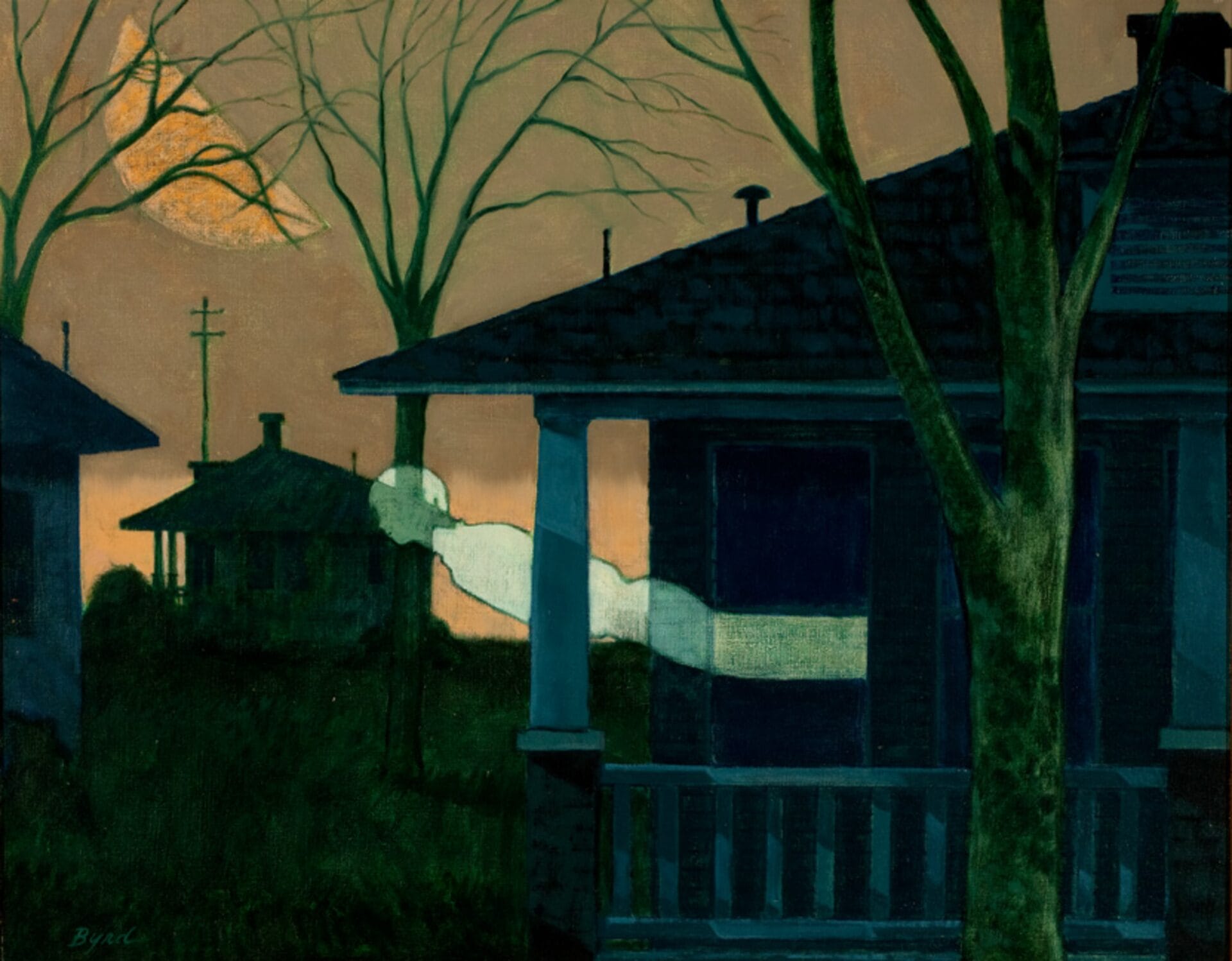
Gibson Byrd
Liberation, 1973
Oil on canvas
27 1/4 x 33 1/2 inches
Gift of the Estate of Janet Ela
Wisconsin artist Gibson Byrd transformed familiar places into psychologically charged scenes. Here, a pale, ghostlike form passes through a quiet neighborhood without explanation, turning an ordinary setting into something mysterious, dreamlike, and unresolved.
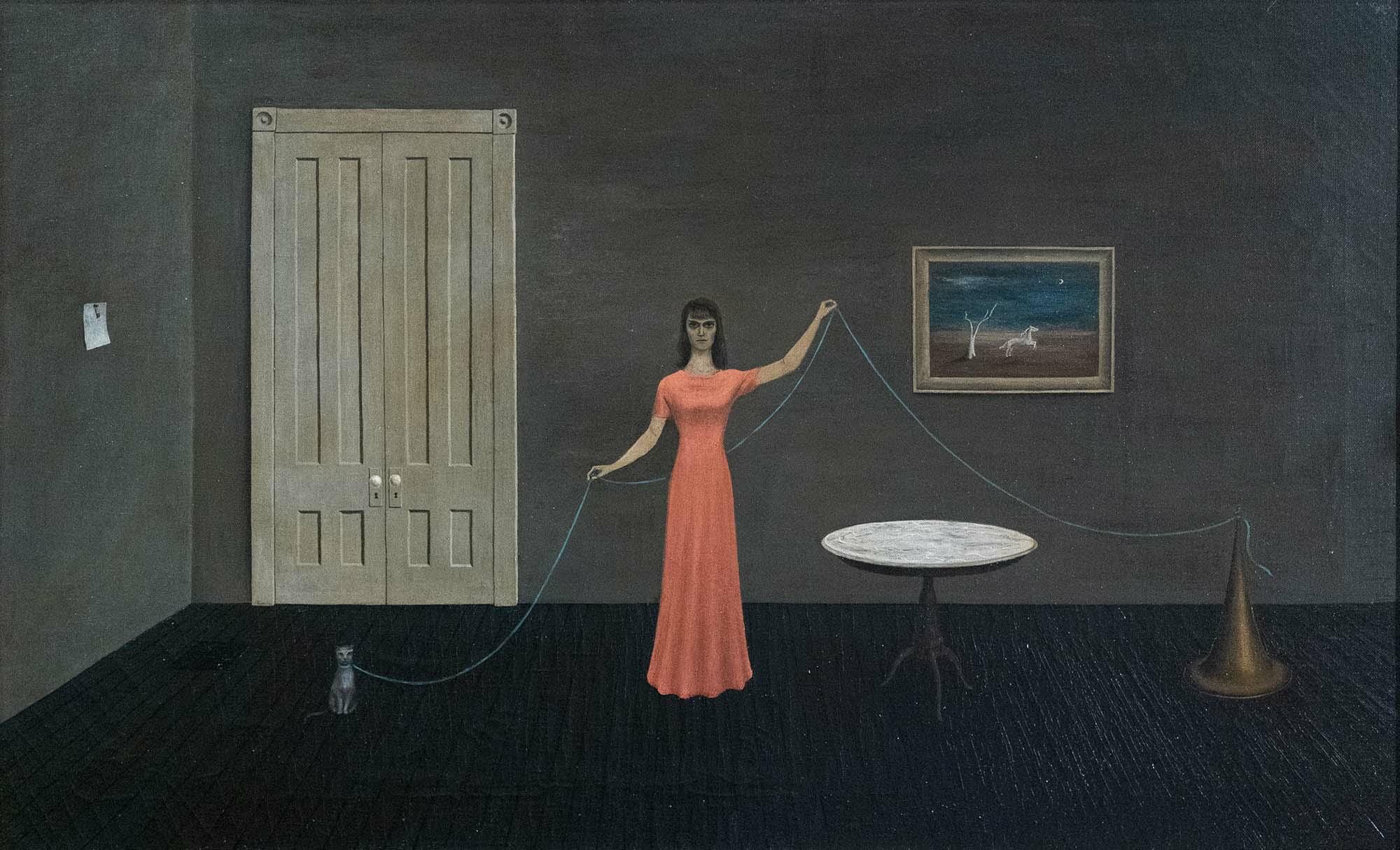
Gertrude Abercrombie
Where or When (Things Past), 1948
Oil on canvas
21 1/2 x 35 1/2 inches
Gift of the Gertrude Abercrombie Trust
Gertrude Abercrombie transformed sparse interiors and ordinary objects into enigmatic psychological worlds. Long a cult figure in Chicago, she has recently gained wider recognition. Here, Abercrombie connects disparate objects with a mysterious string, suggesting a private logic we can see but never fully enter.

Nancy Mladenoff
CItyscape, 1998
Relief and lithography
Printed by Bruce Crownover, Tandem Press
Gift of Samantha and Bruce Crownover
Flying saucers piloted by women hover above an otherwise familiar city. Nancy Mladenoff collapses everyday life and science fiction, making the extraordinary seem strangely ordinary. The print was produced at Madison’s Tandem Press by master printer Bruce Crownover.
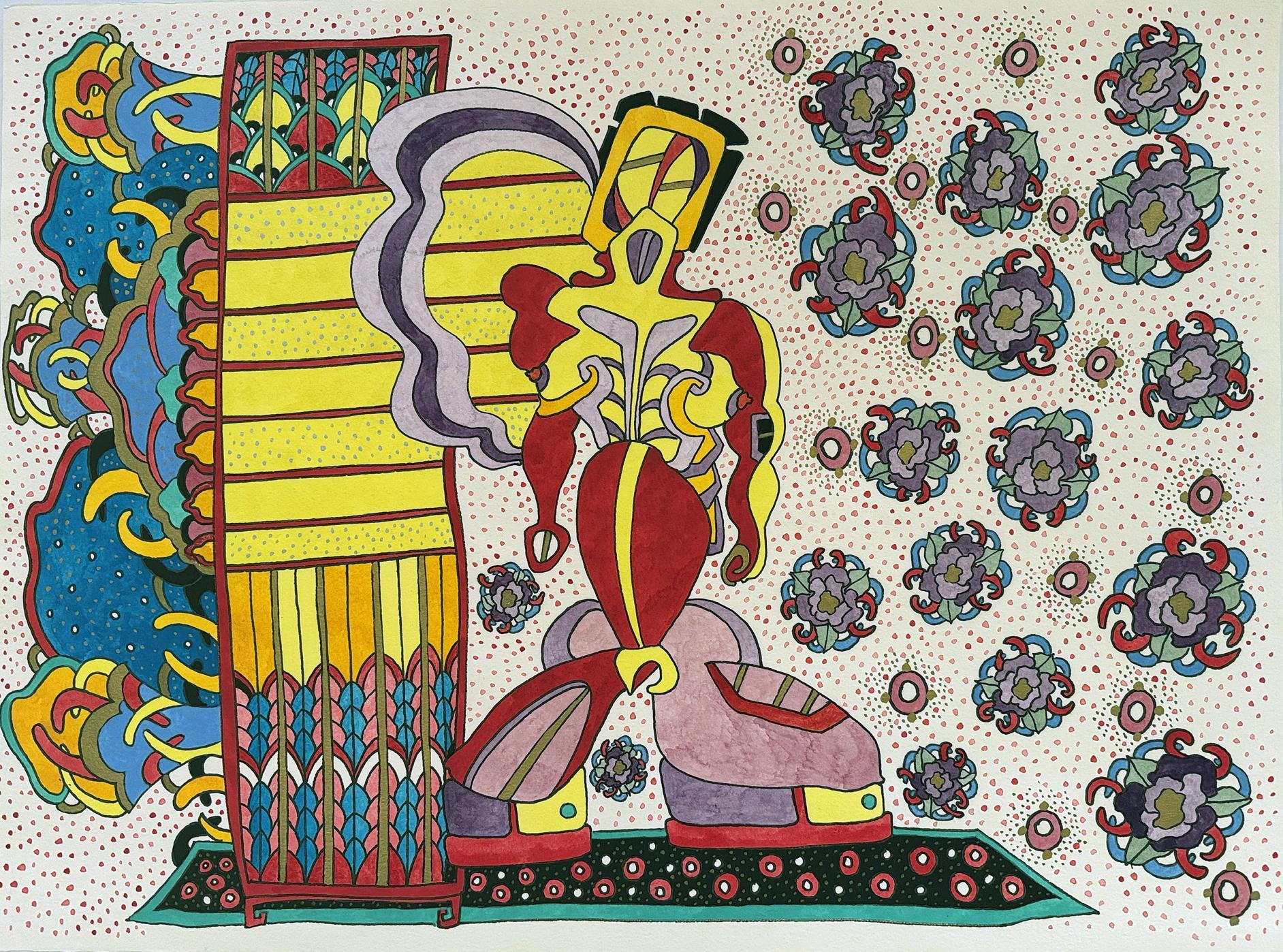
John Schact
Untitled, n.d.
Mixed media
22 x 29 inches
Gift of Jane Wenger and Kohler Foundation, Inc.
Pattern, costume, architecture, and fantasy collide in John Schacht’s exuberant world. Largely outside Chicago’s art establishment during his lifetime, Schacht has gained new recognition through efforts to preserve and place his singular body of work.
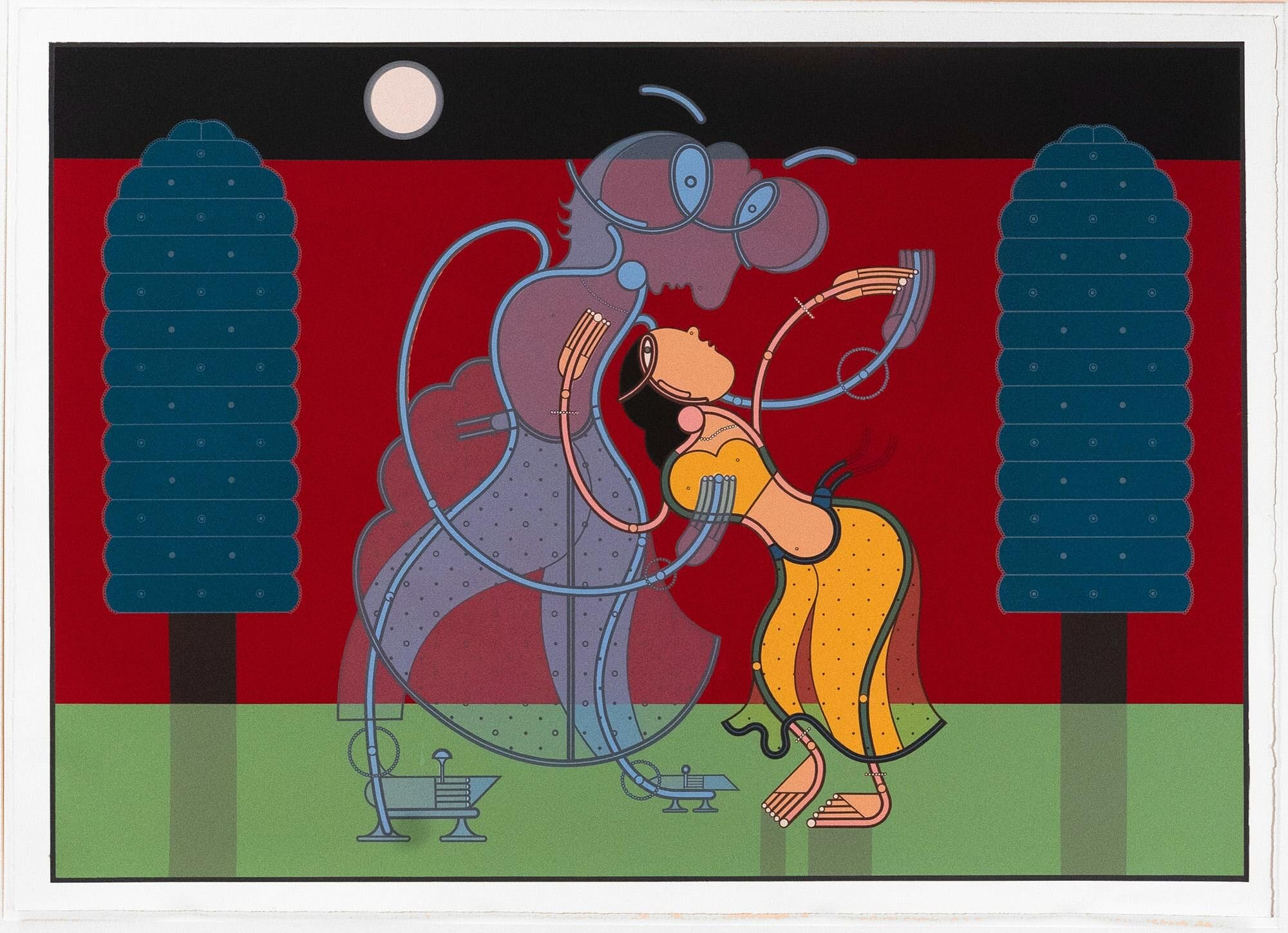
Barbara Rossi
Moon Meet May, 1993
Color screenprint on cream wove paper
30 1/4 x 42 1/4 inches
Gift of Barbara Rossi and Kohler Foundation, Inc.
An original Chicago Imagist, Barbara Rossi rejected the restraint dominating much postwar American art. Here, bodies become tubes, patterns, and improbable forms. This strange encounter embraces humor, ambiguity, ornament, and visual excess.
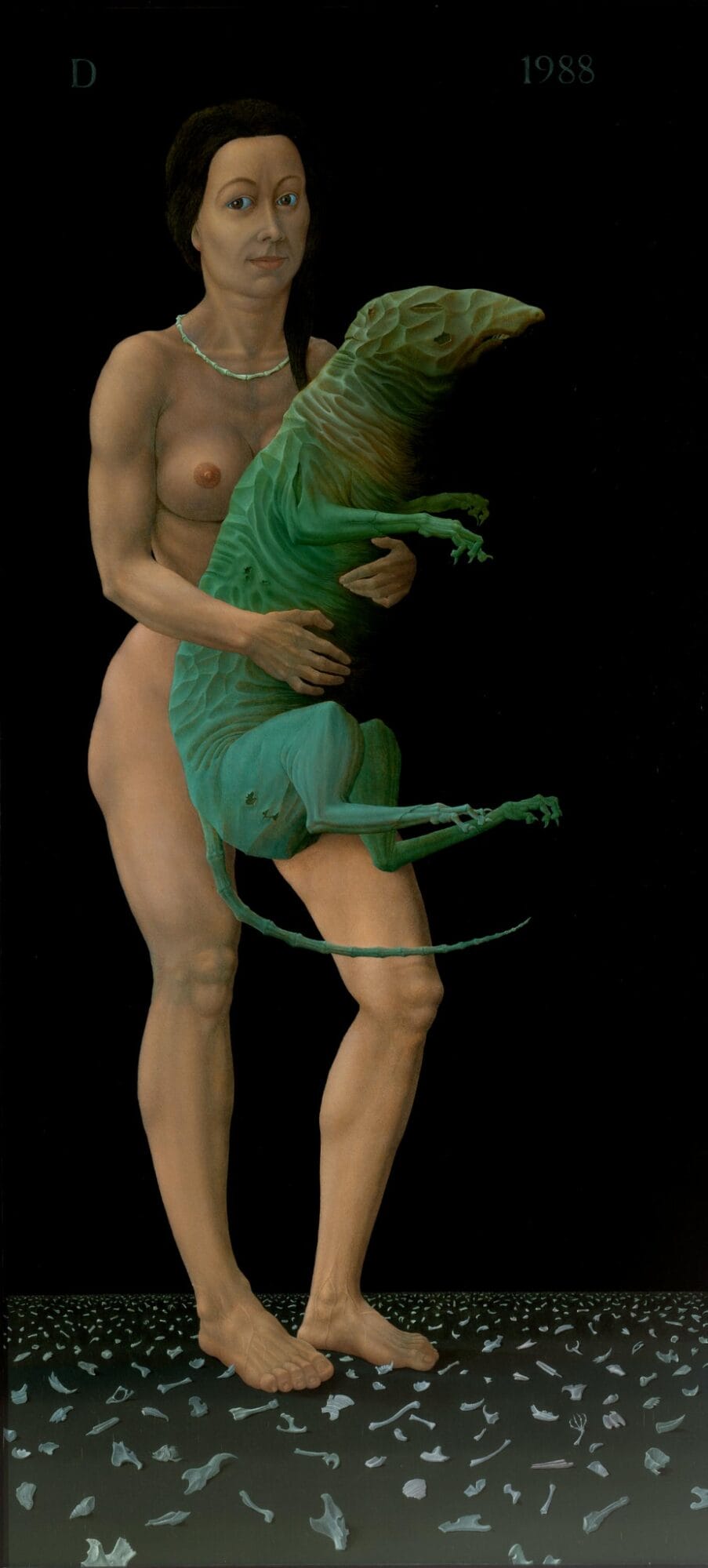
John Wilde
Portrait of D, 1988
Oil on wood
62 x 29 inches
Purchase, through the Rudolph and Louise Langer Fund and gift from Karen Johnson Boyd
Wisconsin artist John Wilde combined meticulous observation with fantasy and Surrealism. Here, a nude woman calmly holds an impossible green creature. Wilde’s extraordinary technical precision makes the irrational convincing—and the familiar body profoundly strange.
The World Arrives Here
The Langer collection brought a cosmopolitan outlook to MMoCA. Japanese prints and European art reveal images moving across borders and markets—and the curiosity about a wider world that helped shape collecting in Madison.
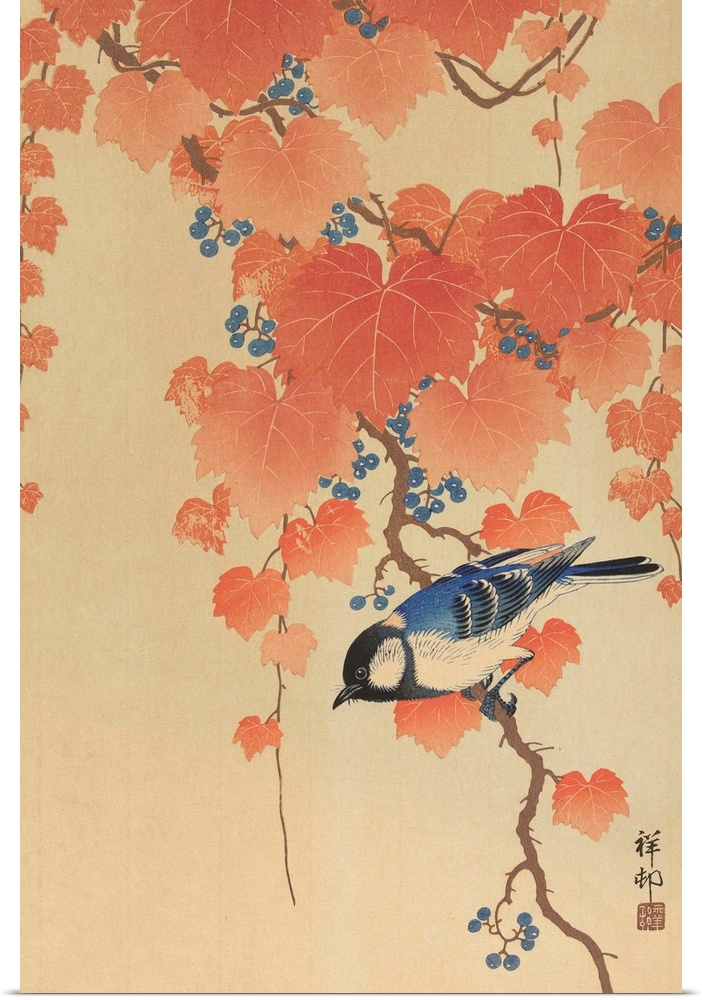
Ohara Koson
Tit on Paulownia, 1934
Woodblock print
14 3/8 x 9 1/2 inches
Bequest of Rudolph and Louise Langer
Ohara Koson specialized in bird-and-flower prints that combined close observation with elegant design. His work reached a thriving international market for Japanese prints. This example came to MMoCA through Rudolph and Louise Langer, whose collecting greatly expanded the Museum’s international scope.
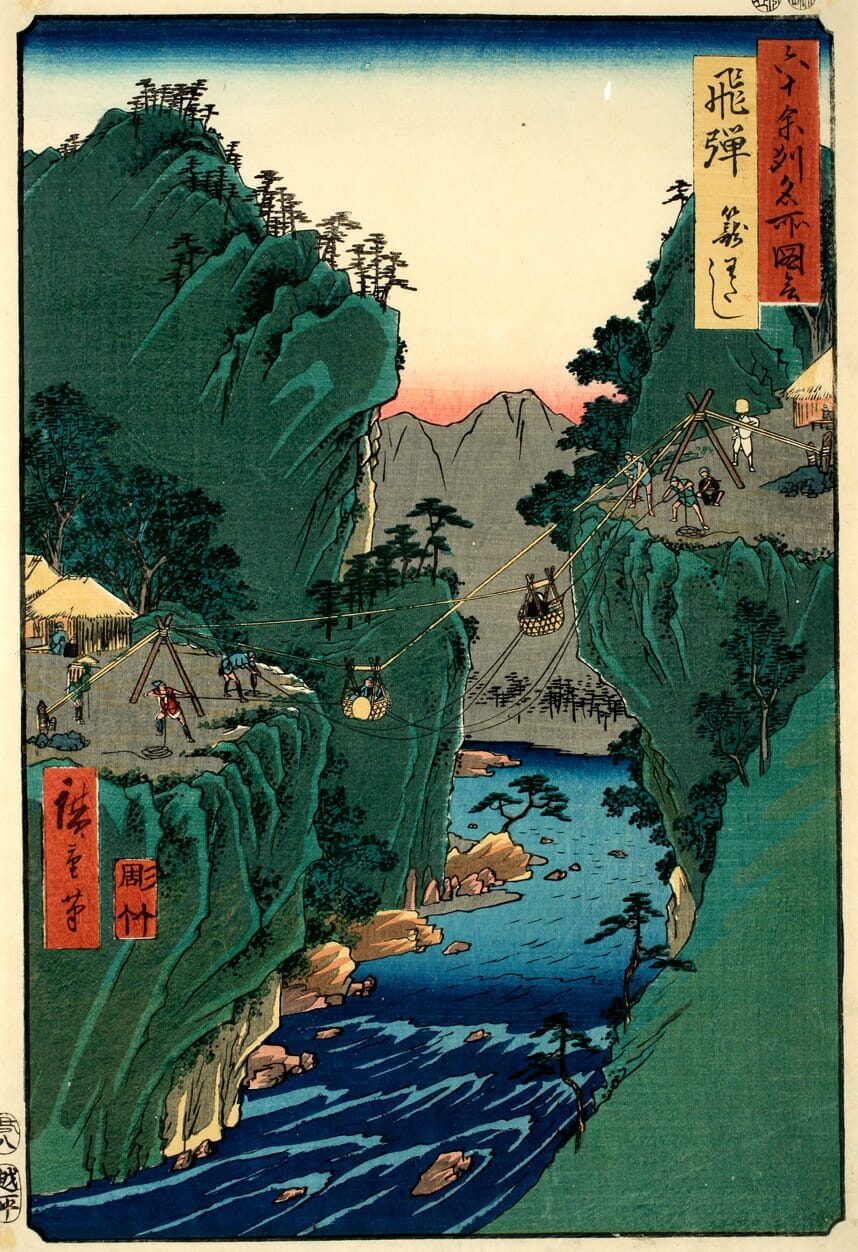
Utagawa Hiroshige
Rope Ferry, 1853-1856
Woodblock print
13 3/4 x 9 inches
Bequest of Rudolph and Louise Langer
Travelers cross a dramatic gorge suspended from ropes. One of Japan’s great print designers, Hiroshige became enormously influential abroad as his compositions captivated European and American artists and collectors and transformed Western ideas about pictorial space.
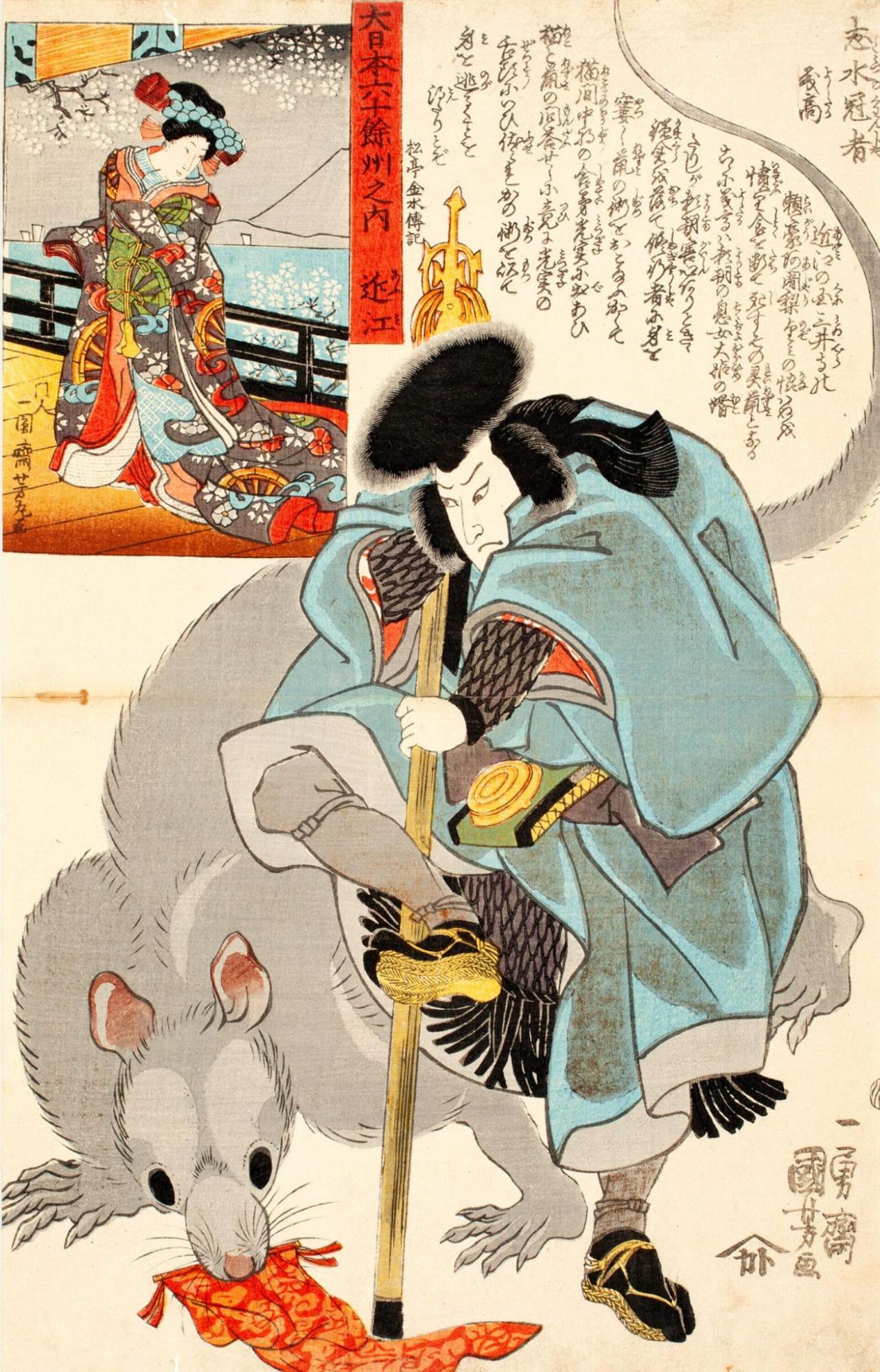
Utagawa Kuniyoshi
Dai Nippon Roku Ju Yo Shu no Uchi, 1845
14 1/2 x 9 3/4 inches
Museum Purchase
A warrior, woman, giant rat, text, and pattern collide in Kuniyoshi’s exuberant composition. Made for a popular market in 19th-century Japan, the print complicates distinctions between fine art and mass culture—a tension that resonates with MMoCA’s later Chicago Imagist holdings.
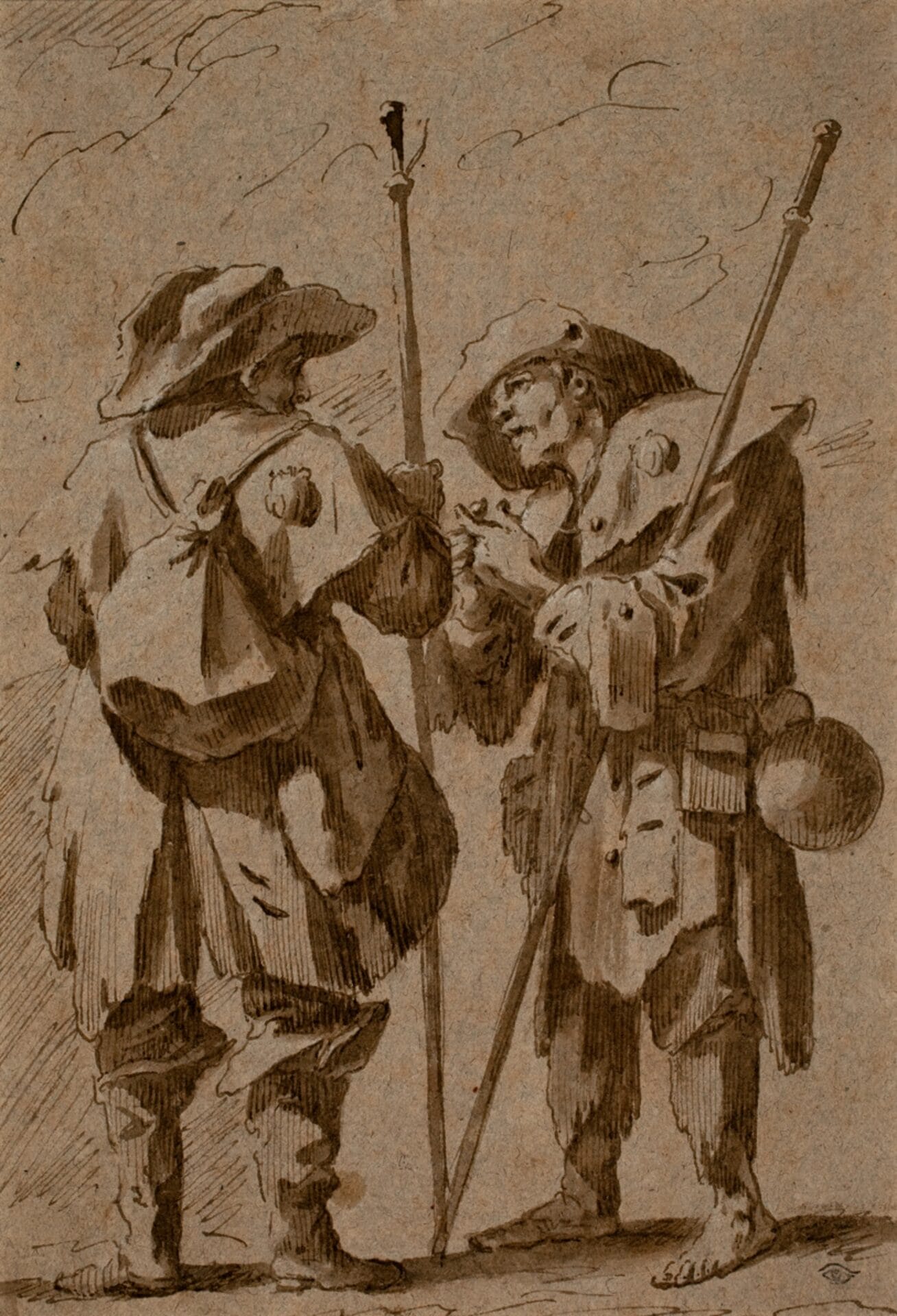
Italian School
Two Men, 19th century
8 1/2 x 5 5/8 inches
Bequest of Rudolph and Louise Langer
Two travelers converse in this pen and ink study. Its unidentified maker reminds us that a collection assembled over 125 years preserves uncertainties as well as masterpieces. Attribution and knowledge change, making an object’s history within the Mmuseum part of its story.

Rosa Bonheur
Landscape with Reclining Bull, n.d., 19th c
Ink drawing with white chalk
7 1/4 x 10 3/4 inches
Bequest of Rudolph and Louise Langer
Celebrated for her closely observed animals, Rosa Bonheur became one of the 19th century’s most successful women artists, achieving international fame despite barriers facing women in the profession. After her reputation declined in the 20th century, her remarkable career has received renewed attention.
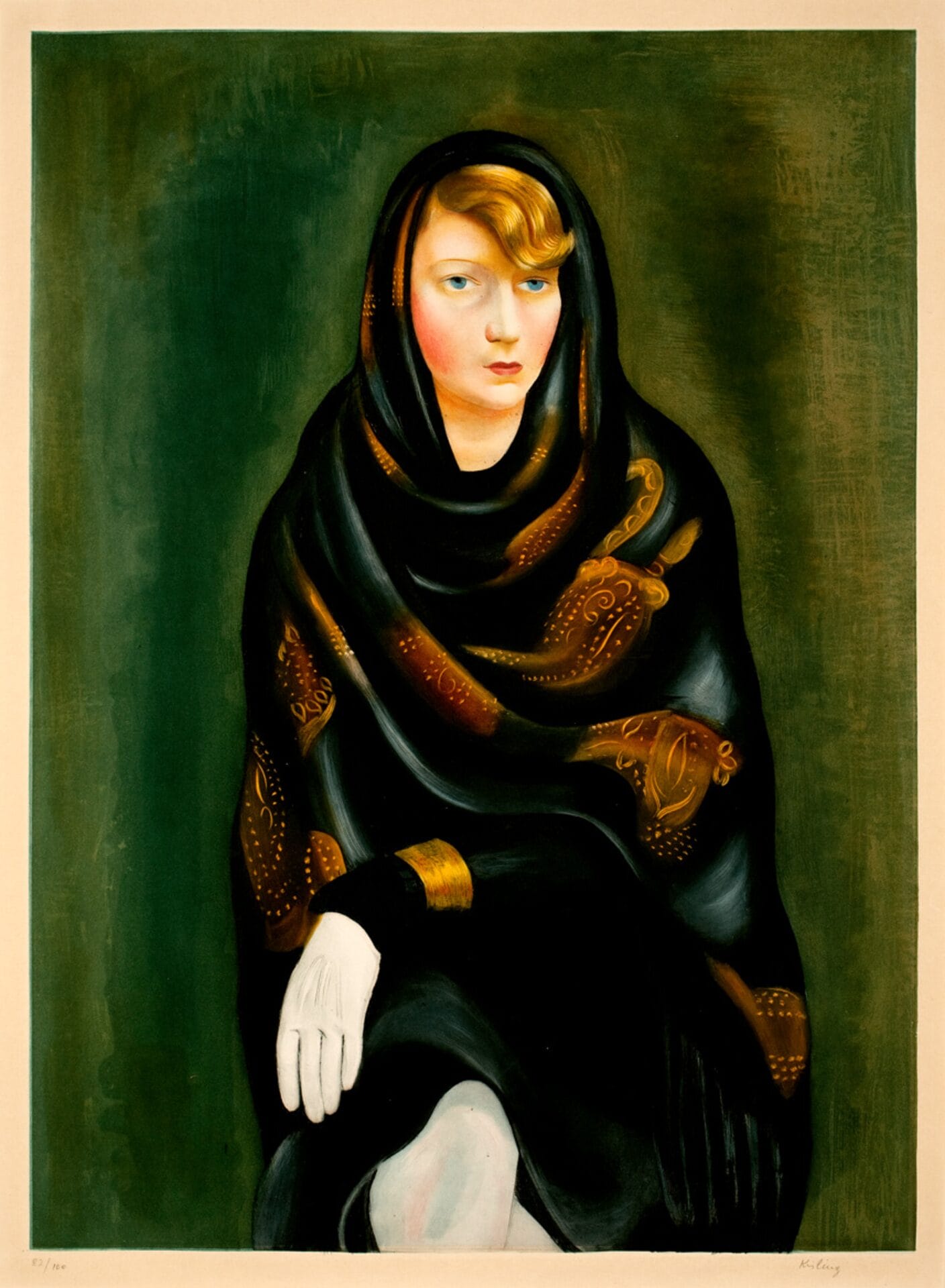
Moise Kisling
Jeune femme (Mme. D. Le Bec), 1927
Engraving and aquatint
22 1/4 x 16 inches
Bequest of Rudolph and Louise Langer
Born in Kraków and based in Paris, Moïse Kisling belonged to the international community that made Montparnasse a center of modern art. His stylized portraits found an enthusiastic market. Acquired by the Langers, this work reflects the cosmopolitan outlook they brought to collecting in Madison.
Second Glances
Landscape, animals, fashion, and everyday life appear familiar, but artists continually reshape what we see. Viewed through MMoCA’s contemporary collection, these works reveal older traditions of invention, interpretation, and fantasy.
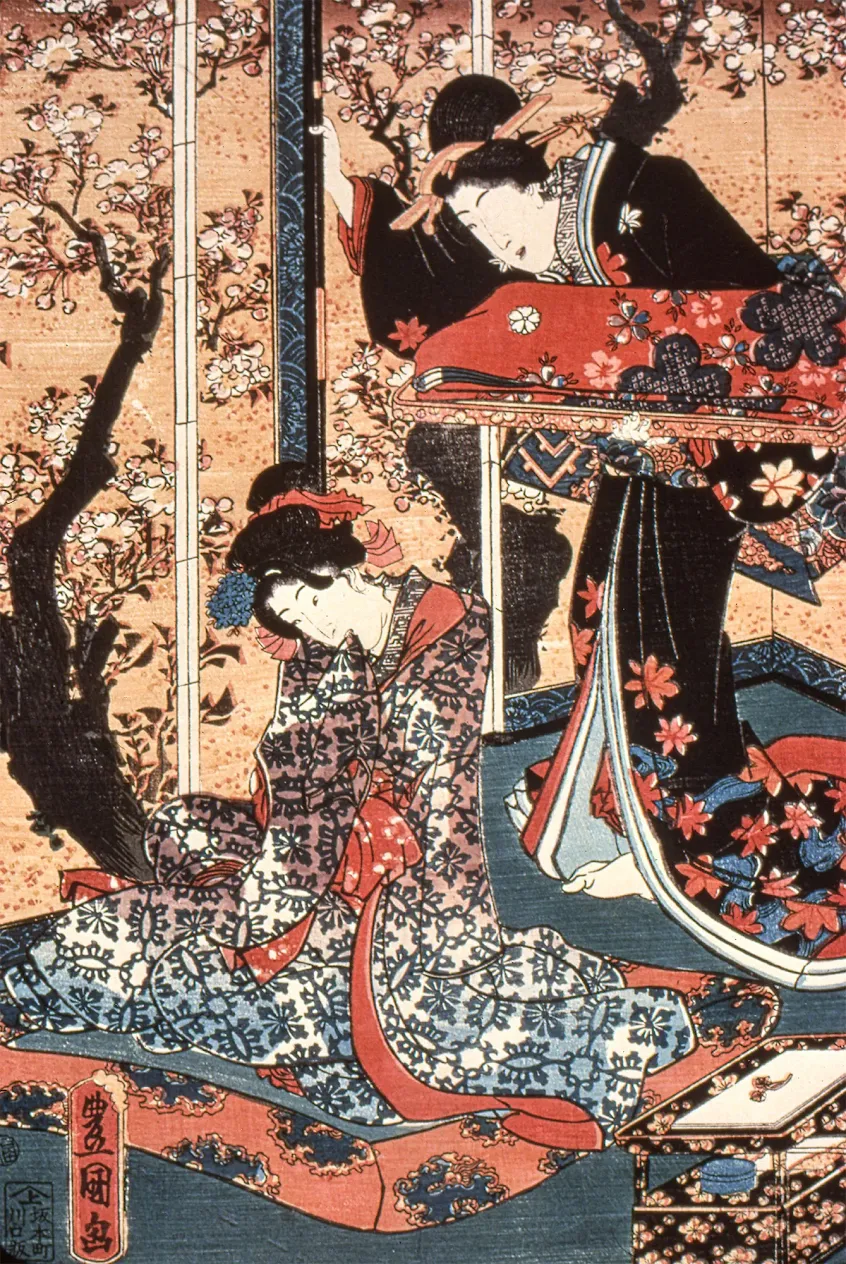
Utagawa Kunisada
Two Women, n.d.
Woodblock print
14 1/4 x 9 7/16 inches
Bequest of Rudolph and Louise Langer
Figures, textiles, blossoms, and furnishings compete across a richly patterned surface. Kunisada was among 19th-century Japan’s most successful print designers, creating images of fashion, theater, literature, and urban life for a broad commercial audience.
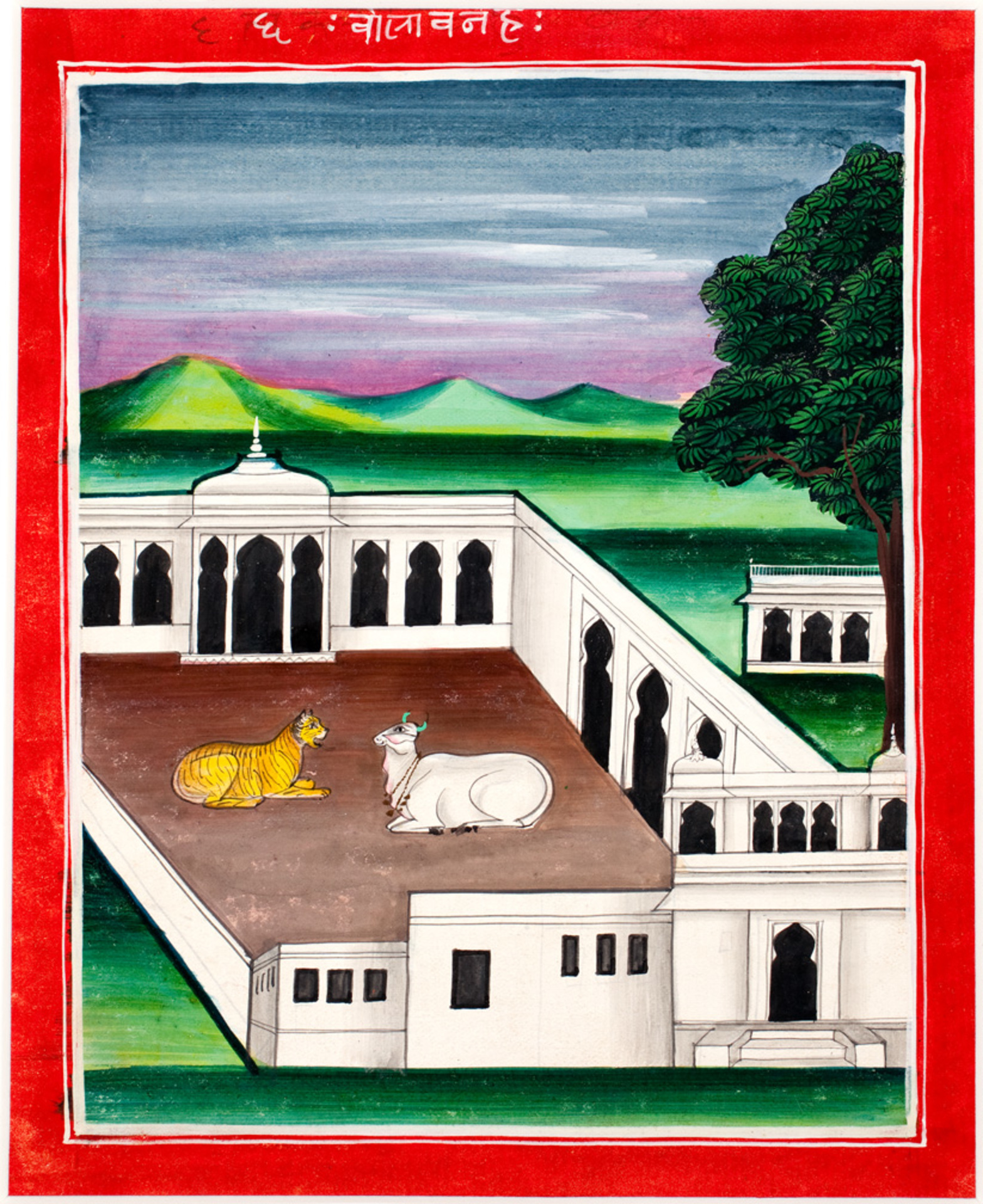
Courtyard with Tiger and Cow, n.d. 19th c
Egg tempera on paper
7 7/8 x 6 3/8 inches
Bequest of Rudolph and Louise Langer
A tiger and cow share an improbable calm within a South Asian architectural setting. MMoCA’s records do not identify its maker. That uncertainty reveals a challenge of historical collecting: objects can travel across cultures and generations while the knowledge that once surrounded them is lost.
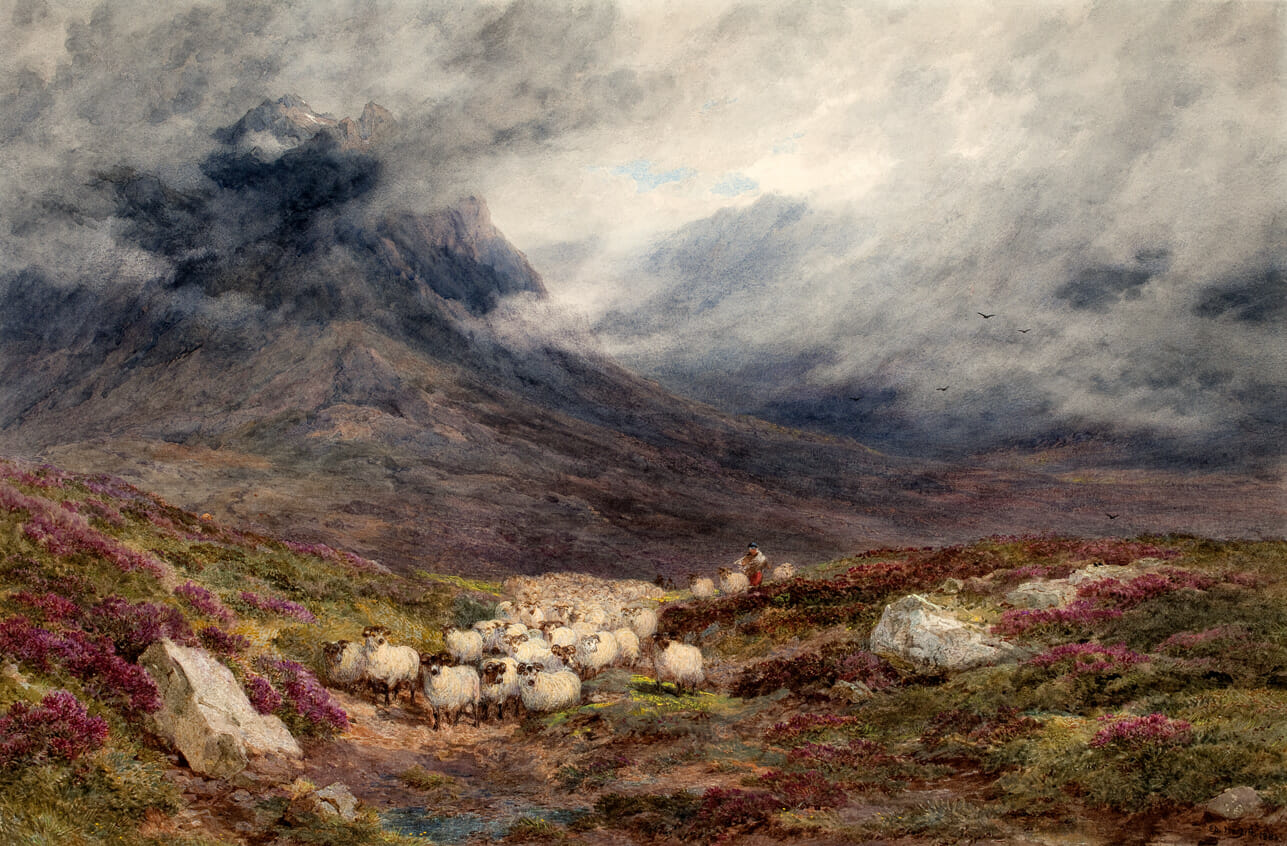
Edward Hargitt
Scottish Landscape with Sheep, 1881
Watercolor
19 ⅜” x 29 ½”
Bequest of Rudolph and Louise Langer
Sheep and shepherd are dwarfed by mountains and turbulent weather in this dramatic watercolor. Atmosphere transforms an ordinary rural subject into an emotional experience, reminding us that landscape is always an act of interpretation.
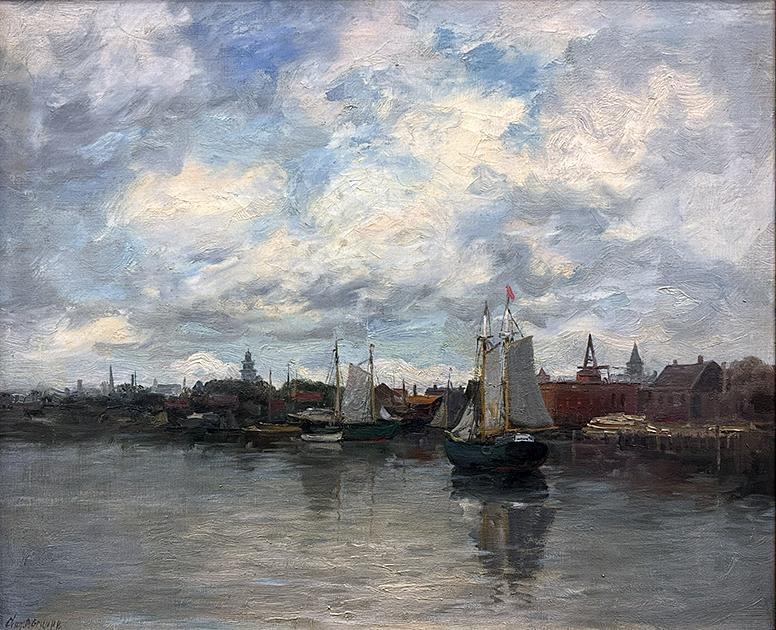
Charles Paul Gruppé
Gloucester Harbor, n.d.
Oil on canvas
19 ½” x 23 ½”
Bequest of Rudolph and Louise Langer
Boats anchor Gruppé’s harbor, but weather, light, reflection, and an expansive sky dominate our experience of it. The painting reminds us that even a seemingly straightforward landscape is constructed through choices about viewpoint, atmosphere, scale, and attention.
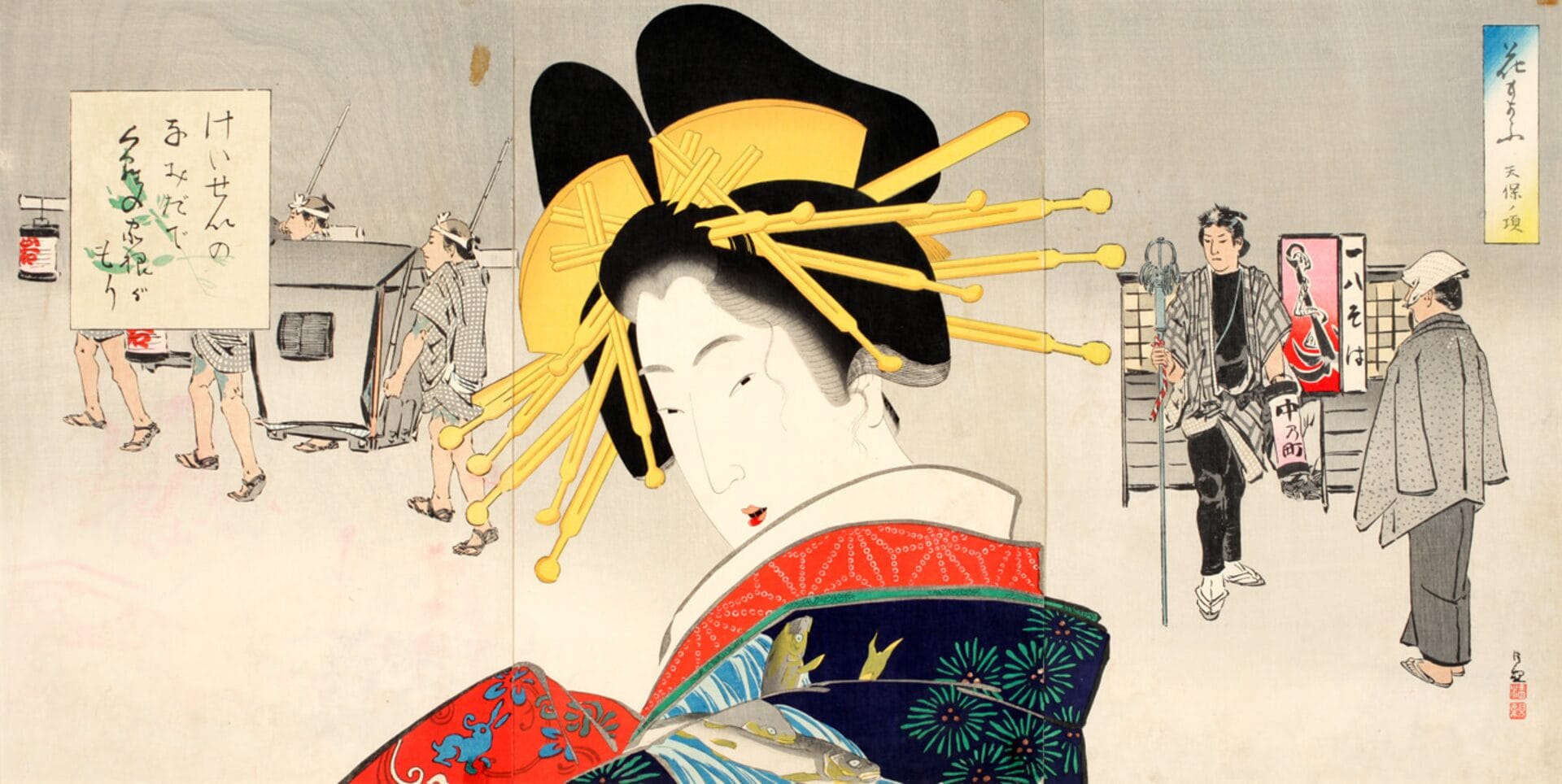
Kiyochika Kobayashi
Beauty from the Tenpo Era, 1896
Woodblock print
14 ⅝” x 28 013/16”
Bequest of Rudolph and Louise Langer
Created amid Japan’s rapid modernization, Kiyochika’s 1896 print looks back to the fashions of the earlier Tenpō era. What appears to us as “historical Japan” was therefore already an imaginative reconstruction of the past when Kiyochika made it.
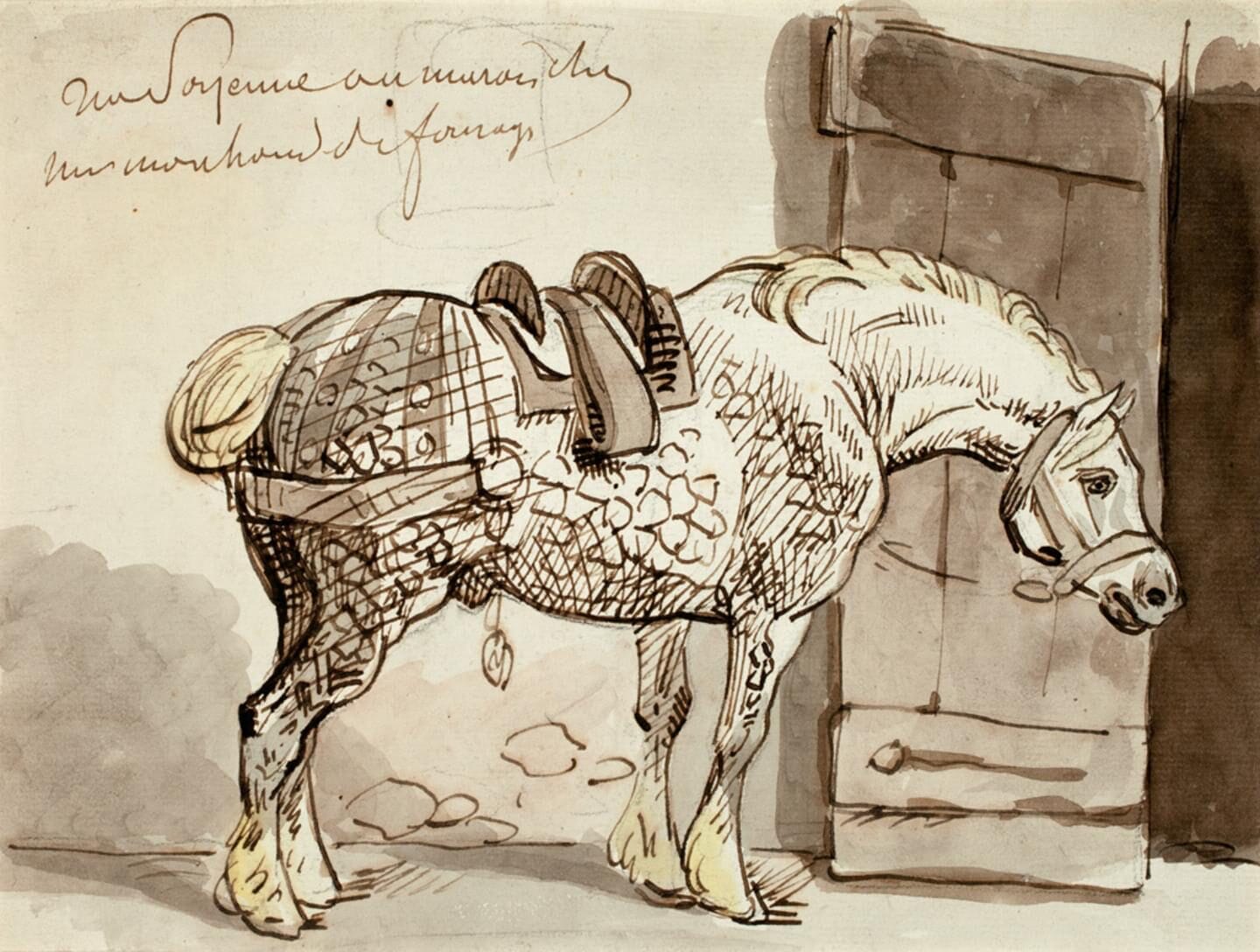
Horse, 19th century
Ink and wash drawing
7 x 9 ½”
Bequest of Rudolph and Louise Langer
A lone horse stands beneath a handwritten inscription. Without a known artist or fuller history, line, gesture, and the empty saddle carried by the animal take center stage, asking what we can learn from an object when biography and attribution cannot guide us.
Curator
Curator Name
Paul Baker Prindle
Curator Bio
Baker is an American curator and museum director. He is the Gabriele Haberland Director of the Madison Museum of Contemporary Art (MMoCA). Previously he directed the Kleefeld Contemporary Art Museum and the Lilley Museum of Art. He curated Lee Krasner: Collage Paintings 1951–1955 and the first museum solo exhibitions for Dyani White Hawk (See Her) and Clifford Prince King (Yesterday and Beyond). He lives and works in Wisconsin.
Programing and Events
Opening Reception
Saturday, September 19 • 7–10 PM
