September 9, 2012 to December 30, 2012
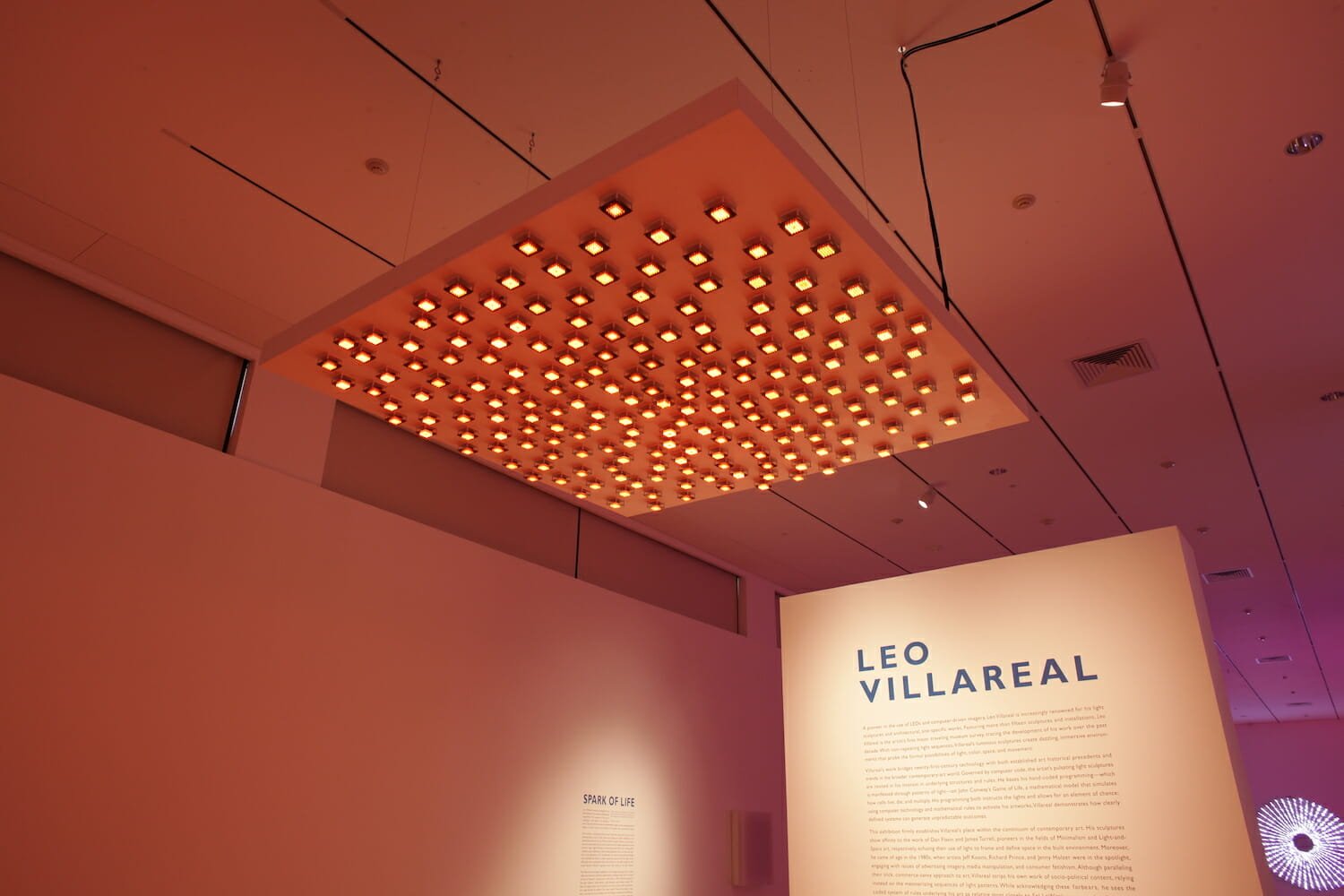
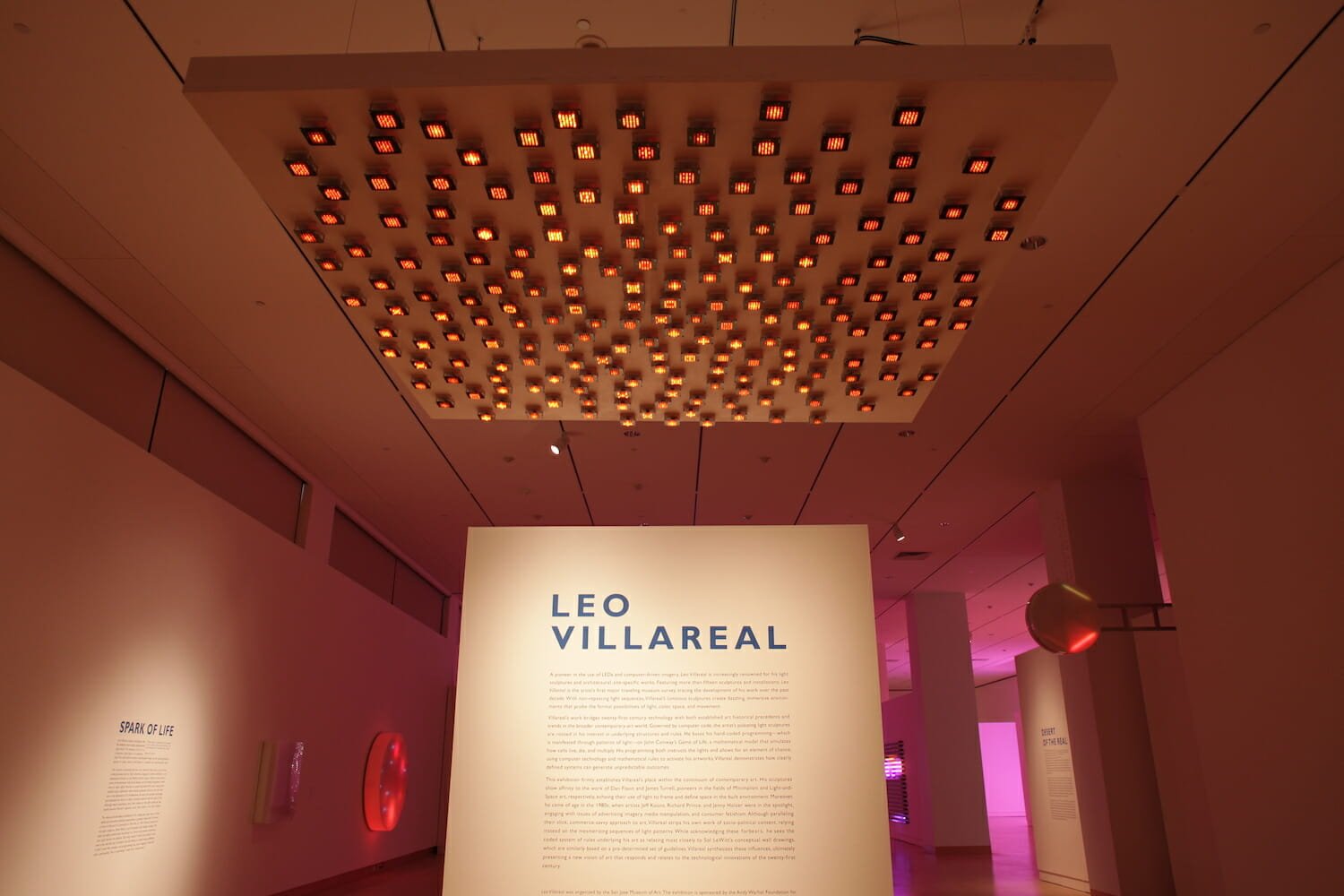
A pioneer in the use of LEDs and computer-driven imagery, the New York-based artist Leo Villareal is increasingly renowned for his light sculptures and architectural, site-specific works. With more than fifteen sculptures and installations, Leo Villareal is the artist’s first major traveling museum survey. The exhibition will be on view in the main galleries of the Madison Museum of Contemporary Art from September 9 to December 30, 2012. An MMoCA Nights opening celebration, including a talk by the exhibition’s curator, JoAnne Northrup, is scheduled for 6:30–9 pm on Saturday, September 8.
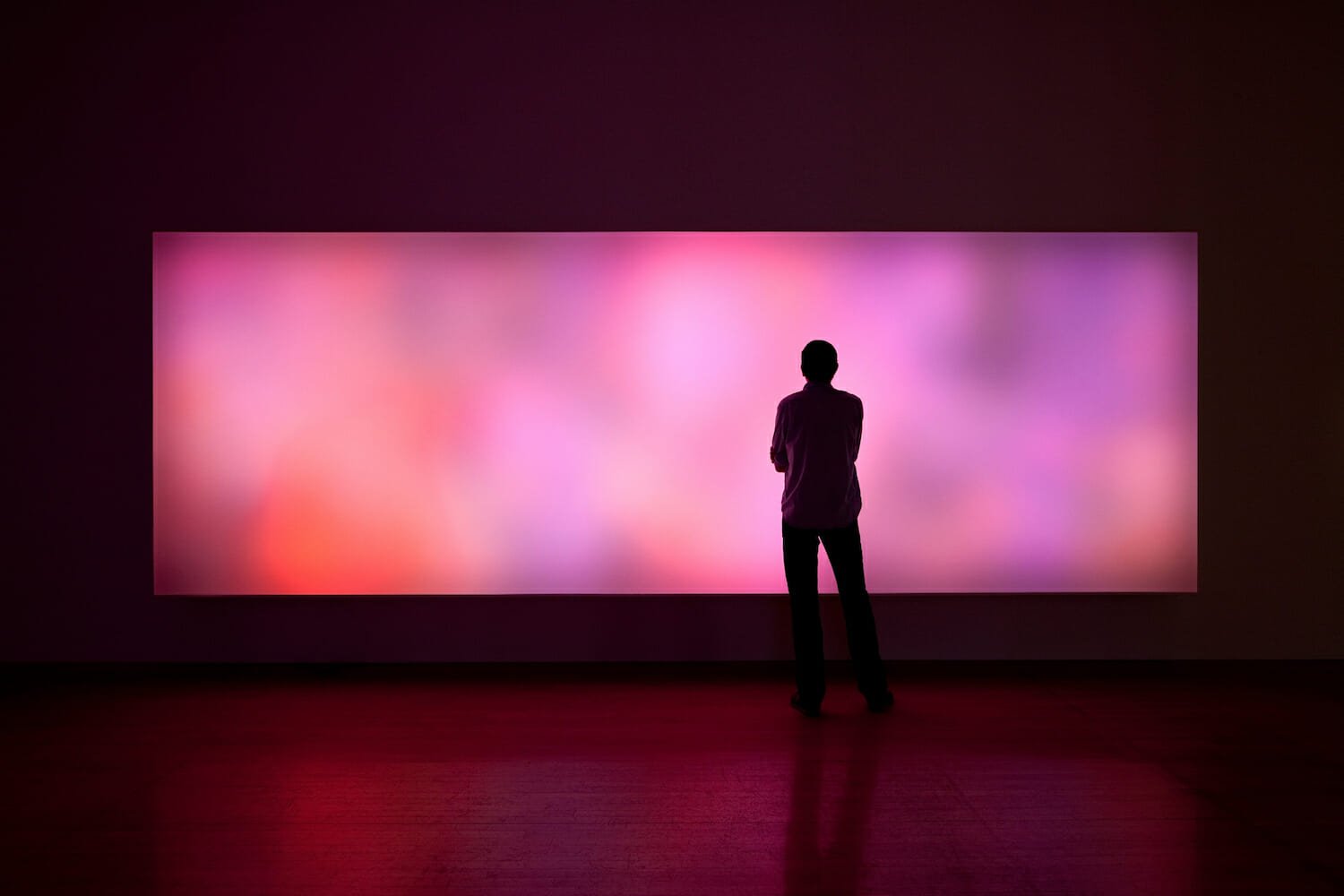
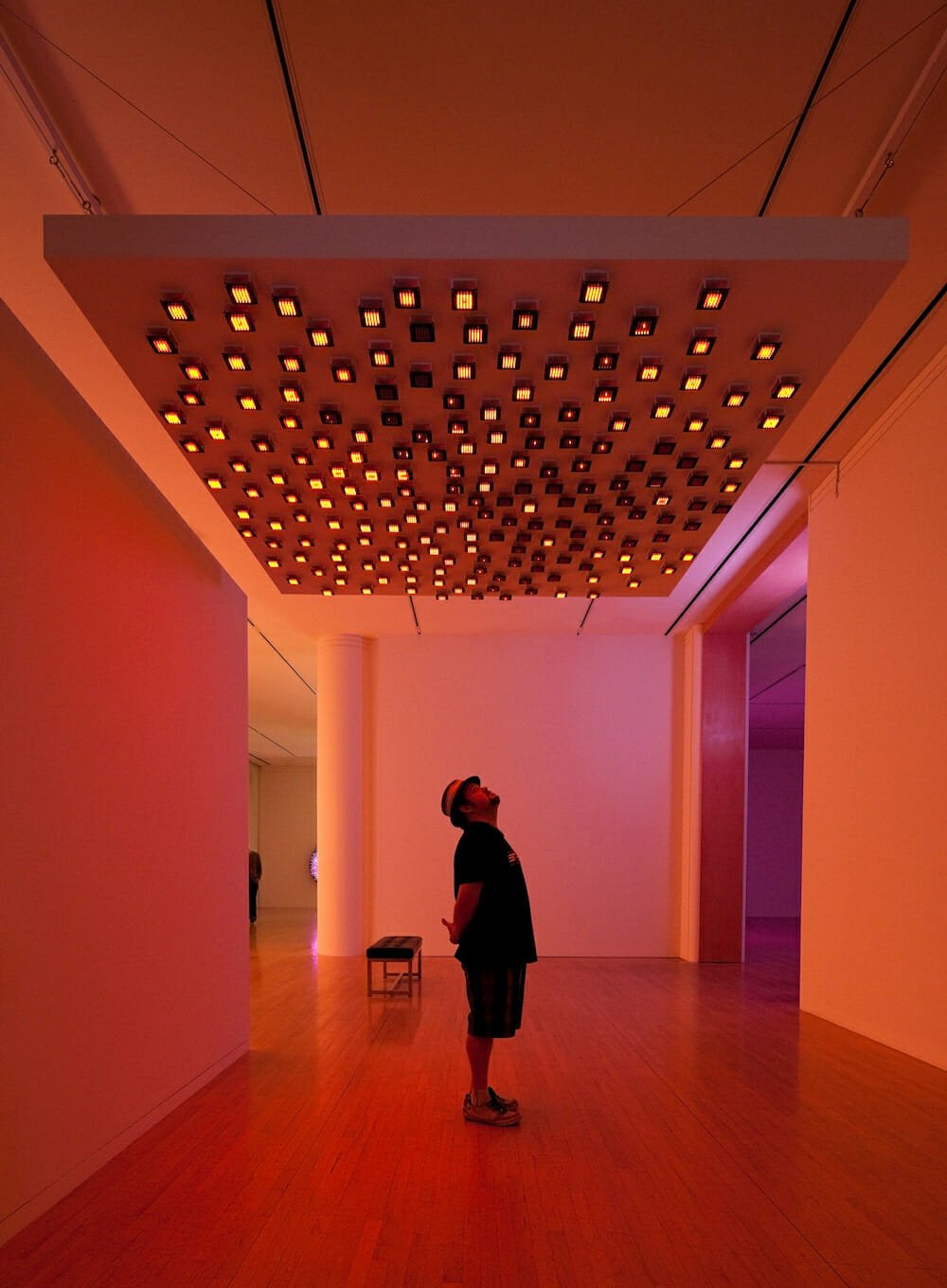
Leo Villareal traces the development of the artist’s work over the past decade, from his earliest experiments using a limited number of strobe lights activated by custom programming, to his most recent works that feature thousands of pinpoint LEDs firing in hypnotic patterns. With non-repeating light sequences ranging from soothing, undulating rhythms to anxious, kinetic dances, the artist’s luminous sculptures create dazzling, immersive environments that probe the formal possibilities of light, color, space, and movement.
Villareal’s work bridges twenty-first century technology with both established art historical precedents and trends in the broader contemporary-art world. Governed by computer code, the artist’s pulsating light sculptures are rooted in his interest in underlying structures and rules. He bases his hand-coded programming—which is manifested through patterns of light—on John Conway’s Game of Life, a mathematical model that simulates how cells live, die, and multiply. His programming both instructs the lights and allows for an element of chance; using computer technology and mathematical rules to activate his artworks, Villareal demonstrates the capacity of clearly defined systems to generate unpredictable outcomes.
At the same time, Leo Villareal’s work can be firmly situated within the continuum of modern art. For example, his sculptures show affinity to the work of Dan Flavin and James Turrell, pioneers in the fields of Minimalist and Light-and-Space art, respectively, echoing their use of light to frame and define space in the built environment. Visual correlations also exist between Villareal’s art and that associcated with Post-Painterly Abstraction, a movement concerned with optics and the way color and abstraction can create illusions of depth and motion. Rather than using paint and canvas, Villareal instead appeals to the aesthetics of abstraction and the science of perception through computer programming and electrical illumination. Moreover, growing up in the 1980s (he was born in 1967), he witnessed the emergence of post-modernist artists such as Jeff Koons, Richard Prince, and Jenny Holzer, who engaged with issues of advertising imagery, media manipulation, and consumer fetishism. Although paralleling their slick, commerce-savvy approach to art, Villareal strips his own work of socio-political content, relying instead on the mesmerizing sequences of light patterns. While he acknowledges these forebears, he sees the coded system of rules underlying his art as relating most closely to Sol LeWitt’s conceptual wall drawings, which are similarly based on a pre-determined set of guidelines.
Ultimately, Villareal presents a new vision of art that reflects our contemporary experience: complex, quickly changing, and fundamentally informed by and integrated with technology.
Exhibition Sponsors
Leo Villareal was organized by the San Jose Museum of Art. The exhibition is sponsored by the Andy Warhol Foundation for the Visual Arts, the Walter and Karla Goldschmidt Foundation, and Bank of America.
The Wisconsin presentation of Leo Villareal is generously sponsored by Mary Ellyn and Joe Sensenbrenner; Ellen Rosner and Paul Reckwerdt; James and Sylvia Vaccaro; Perkins Coie, LLP; Alliant Energy Foundation; McGladrey; Terry Haller; Dane Arts with additional funds from the Endres Mfg. Company Foundation; a grant from the Wisconsin Arts Board with funds from the State of Wisconsin and the National Endowment for the Arts; and MMoCA Volunteers.
Learning Resources
For Teachers
Leo Villareal Teaching Page
This page provides analysis of Amanecer, biographical information on Leo Villareal, pre- and post-visit discussion questions, and a full-color reproductions for teachers. Effective as an introduction to a museum visit, the guide is also valuable as an ongoing classroom resource.
For Families
Leo Villareal Lets Look Family Guide
These fun, interactive hand-outs help children to think imaginatively about what they are seeing while learning about Leo Villareal and his art. Let's look handouts are designed for families to use together and are available free of charge in the galleries.
For Everyone
Soundtrack for Leo Villareal
Download a free soundtrack for the exhibition from iTunes or Soundcloud.
Related Programming
September 8 • 6:30–9 pm
MMoCA Nights Celebrates Leo Villareal
Celebrate the opening of MMoCA’s main galleries exhibition Leo Villareal. Preview the exhibition beginning at 6:30 pm, then head to the lecture hall to hear Animating Light, a presentation by JoAnne Northrup. Live music from Null Device and hors d’oeuvres from Fresco will round out the evening. Free for MMoCA members / $10 for non-members.
Saturday, September 8 ∙ 7–8 pm
Animating Light: A Presentation by JoAnne Northrup
A Lussier Family Lecture
As part of the September 8 MMoCA Night opening celebration for Leo Villareal, exhibition curator JoAnne Northrup will describe the progression of the artist’s career. Northrup will touch on Villareal’s education at Yale and New York universities, his early experiments with virtual reality and interactive television, and the genesis of his light art, inspired by his experiences at the week-long Burning Man festival, held annually in Nevada’s Black Rock Desert. Starting in 1997, Villareal began to pursue a more systems-based approach, devising complex light sculptures in which he combined strobe lights, neon, and, most recently, LED bulbs activated by his extraordinary custom-made software. Northrup will describe some of Villareal’s most recent projects and place his work within the context of art history.
JoAnne Northrup is director of contemporary art initiatives at the Nevada Museum of Art. Prior to this appointment, she was chief curator (2008–2011) and senior curator (2001–2008) at the San Jose Museum of Art. In 2011, Northrup received a Fulbright Senior Research Scholarship.
Admission to this MMoCA Night is free for museum members and $10 for non-members.
Friday, September 14 ∙ 6:30–7 pm
Substantiation: Leo Villareal—A Talk by Michael Jay McClure
In this gallery talk, Michael Jay McClure will discuss the work of Leo Villareal as the latest provocation in a long-standing conversation within the field of contemporary art. Central to this debate, says McClure, is the question “What are we to do when a work of art becomes immaterial, distributed over a network, and subject to radical change?”
Michael Jay McClure is assistant professor in the University of Wisconsin-Madison Art Department where he teaches the theory and history of modern and contemporary art. His specialties include new media, modern and contemporary painting and sculpture, and film studies, among other subjects. He completed his doctorate at Bryn Mawr in 2006 and holds a Master of Fine Arts degree in creative writing from the University of Iowa’s Writers Workshop.
Saturday, November 10 · 1-1:30 pm
Drop-in Tour
MMoCA docent Gil Hillman discusses Leo Villareal in this free drop-in tour.
Sunday, November 11 · 1-2: 30 pm
Kids' Art Adventures
Kids will explore the lights and colors of Leo Villareal’s dynamic installations before weaving colored cellophane into sun catchers. Kids’ Art Adventures invite families to make art together in MMoCA’s classroom following guided discussions of works on view in the museum’s galleries. Activities are designed for children ages 6-10.